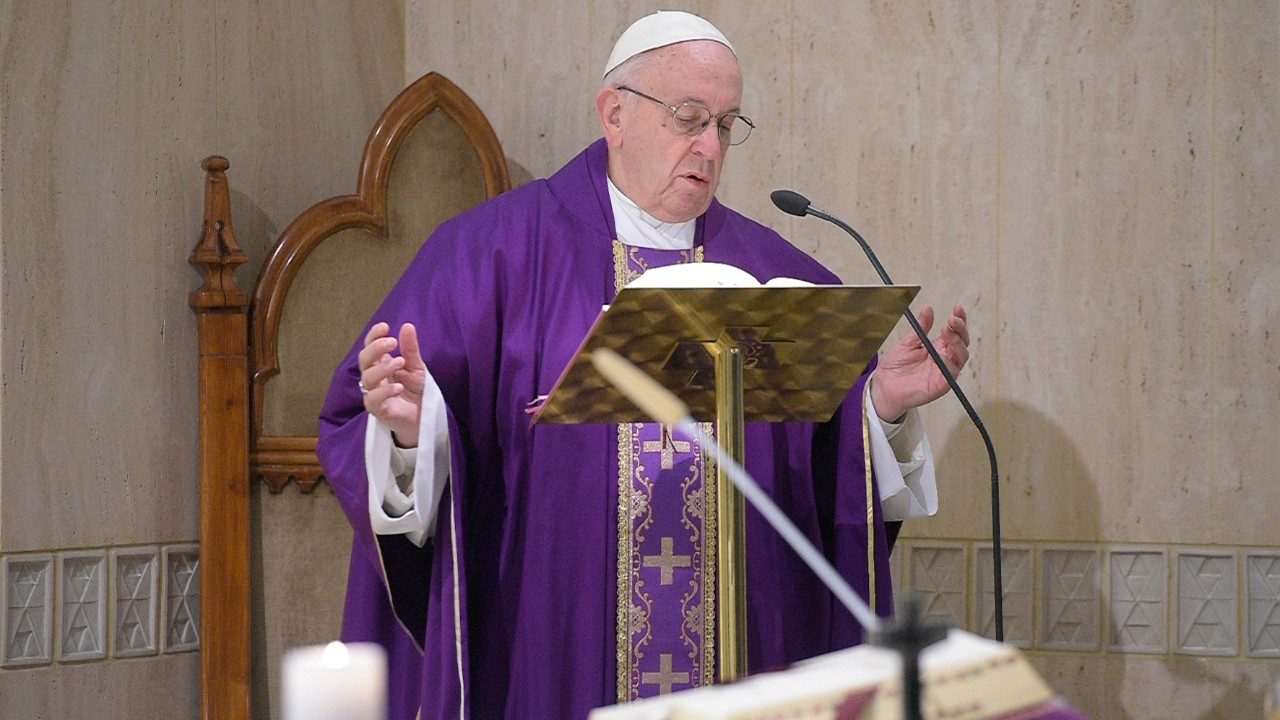
25th Sunday in Ordinary Time || 9-21-25

 Brothers and sisters, 

    Today’s Gospel gives us one of those parables that makes us scratch our heads. A steward is caught squandering his master’s property. Knowing he’s about to be fired, he calls in the debtors and quickly cuts their bills so that they’ll welcome him later. And then—surprise!—the master praises him for being clever. You can almost imagine the disciples looking at Jesus and whispering, “Wait…what? Are we supposed to cheat our bosses now?” Of course not. Jesus isn’t telling us to be dishonest; He’s showing us the steward’s urgency and creativity. When his world started collapsing, he acted decisively. If someone can be that resourceful for something as temporary as money, how much more should we be clever and bold in seeking the things of God that last forever?


    The truth is, everything we have—our money, our time, our talents, even the very breath in our lungs—belongs to God. We are stewards, not owners. One day, the Master will call us to account. The question won’t be, “How big was your paycheck?” or “How many likes did you get on Instagram?” but rather, “How did you use what I gave you to love Me and to care for others?” Jesus calls money “unrighteous mammon,” not because it’s evil in itself, but because it’s temporary and can so easily become a trap. He tells us to use it to “make friends,” meaning to serve the poor, support the Church, and build relationships of mercy and love—so that when money fails (and it always does), we will be welcomed into eternal dwellings. In other words, turn your wallet into a ticket to heaven. And remember, no one has ever seen a U-Haul following a hearse. You can’t take it with you—but you can send it ahead by giving it away.

Finally, Jesus brings it home with a line that cuts to the heart: “You cannot serve both God and mammon.” Money is a wonderful servant but a cruel master. It promises freedom, but if we’re not careful, it ends up owning us. That doesn’t mean we all have to sell everything and live in a cave. It means that God must come first. Our possessions, careers, and plans all find their place when He is Lord. So, let’s ask ourselves today: who’s really in charge—God or the stuff? May we have the wisdom to be faithful stewards, the courage to act with urgency, and yes, even the holy cleverness to use this passing world for eternal gain. If the children of this world can hustle for things that don’t last, let’s out-hustle them in love, mercy, and generosity—so that when the Master calls us home, He’ll say with a smile, “Well done, good and faithful servant…come, share My joy.”

The Exaltation of the Holy Cross

Brothers and sisters,

Today we hear one of the most quoted verses in all of Scripture: “For God so loved the world that He gave His only Son, so that everyone who believes in Him might not perish but might have eternal life.”

Now, we see this verse everywhere—on bumper stickers, billboards, even at football games. You almost expect John 3:16 to show up on your grocery receipt one day: “Two gallons of milk, loaf of bread, eternal life—free with purchase.”

But just because it’s famous doesn’t mean it’s shallow. In fact, it’s one of the deepest truths: God so loved the world. Not “God liked the world a little bit.” Not “God tolerated the world like a distant relative at Thanksgiving.” No—He loved the world.


And let’s be honest: that’s saying something. Because “the world” includes a lot of us at our worst. The guy who cuts you off in traffic, the relative who brings up politics at family dinner, the person who still thinks “reply all” is a good idea. Yep. God loves them too. (I know, I was hoping for exceptions as well.)

Then John tells us: He gave His only Son. Not a spare angel, not a heavenly intern—His Son. That’s like a parent saying, “Here, take my child. I’ll cover the cost.” I lent a friend my car once and worried the whole day it would come back missing a mirror. God doesn’t lend—He gives, permanently. And He gives not to condemn us, but to save us.

That’s the sly twist: so many people think God is the great heavenly referee, just waiting to throw the penalty flag the second we mess up. But Jesus says the opposite. He’s not here to blow the whistle—He’s here to grab us out of the mud, clean us off, and say, “Come home.”

I’ll never forget: when I was a kid, I once broke a lamp while trying to reenact a karate movie. (For the record, the lamp lost.) I thought my mom would disown me. Instead, she hugged me and said, “You’re more important than a lamp.” That’s love. And if a parent can do that for a clumsy kid, imagine how much more God does for us.

Here’s the takeaway: God loves you as you are—mess, cracks, bad decisions and all. He doesn’t wait until you’re perfect; He loves you into perfection. That’s what the Cross is: love poured out without conditions.

So, if God looks at you and says, “I love you enough to die for you,” maybe we can look at others and say, “I can love you enough to forgive you.” Or at least, “I can love you enough not to honk at you when the light turns green.” Baby steps.

Brothers and sisters, John 3:16 is not just a Bible verse to memorize. It’s the heart of the Gospel. The Creator of the stars looks at each of us—ordinary, flawed, sometimes silly people—and says: “You are worth everything.”

And that’s the kind of Good News that’s better than any billboard.

Amen.

17th Sunday in Ordinary Time

Dear brothers and sisters in Christ, 

In today’s Gospel, we hear a beautiful moment where the disciples, noticing the intimate way Jesus prays, ask Him, "Lord, teach us to pray." They had witnessed His closeness with the Father, and they wanted that same connection, that same depth in their own relationship with God. And so, Jesus, in His mercy, gives them—and us—the prayer that has become the foundation of Christian devotion: the Our Father. 

Now, let us reflect on the heart of this prayer, which is captured in verses 2-4: 

"When you pray, say: 'Father, hallowed be your name; your kingdom come. Give us each day our daily bread. Forgive us our sins, for we ourselves forgive everyone who is indebted to us. And lead us not into temptation.'" 


“Father, hallowed be your name.” 

Jesus begins by teaching us to address God as Father, an intimate term that invites us into the heart of the Trinity. To call God “Father” is not just a title—it is an invitation into a relationship, one of love, trust, and care. Jesus doesn’t just call us to address God as Father; He calls us to recognize that in this relationship, we are beloved children. 

When we say “hallowed be Your name,” we are acknowledging God’s holiness and majesty. His name is sacred, set apart, and worthy of reverence. But this isn’t a distant or unreachable holiness—it’s a holiness that invites us to come near. To recognize His greatness is to invite Him into the mundane of our lives, to sanctify our day-to-day actions, and to live as those who bear His name. 

“Your kingdom come.” 

This is not just a wishful longing for the future, but a prayer that invites God’s reign to enter into our lives here and now. When we pray for God's kingdom to come, we are asking for His will to be done on earth as it is in heaven, starting within us. We ask that His peace, His justice, His love, and His mercy reign in our hearts, transforming us into instruments of His Kingdom in the world. 

“Give us each day our daily bread.” 

Here, we ask for God’s provision, not just in terms of material needs, but for all that sustains us spiritually. Jesus teaches us to pray with trust in God’s daily care. In a world that often encourages anxiety about tomorrow, this part of the prayer invites us to live in the present, relying on God’s faithfulness each day. We recognize that all we have—our very lives, our families, our sustenance—come from Him. 

But notice, Jesus doesn’t say “give us all the bread we’ll need for a year.” No, He says, “give us each day.” This daily trust is a call to rely on God, to recognize that our need for Him is constant and ongoing. 

“Forgive us our sins, for we ourselves forgive everyone who is indebted to us.” 

Forgiveness is at the heart of the Gospel, and here Jesus makes it clear that our relationship with God is linked to our relationship with others. We ask for forgiveness, not only because we need it, but because we are called to forgive others. The grace we receive from God is never meant to be hoarded; it’s meant to be shared. When we forgive, we mirror the divine mercy God has shown us. 

As we pray, we should examine our hearts and ask: are we holding onto grudges? Are we refusing to forgive? This part of the prayer calls us to examine how we live out the love and forgiveness we seek from God. 

“And lead us not into temptation.” 

Lastly, we ask God to help us in our struggle against sin. This is not a suggestion that God leads us into temptation; rather, it’s a plea for His help in the face of the temptations that arise in our lives. We ask for strength to resist what pulls us away from Him and for the grace to stay on the path of holiness. 


My friends, the Our Father is not just a prayer we say; it’s a way of life we are called to live. It speaks to our deepest desires—to be in relationship with a loving Father, to live in His kingdom, to trust in His daily provision, to receive and extend forgiveness, and to be protected from all that would lead us astray. 

As we go forward in this week, let us reflect on these words. Let them shape the way we approach God, the way we approach others, and the way we live out our faith. When we pray with sincerity, we are not simply reciting words; we are engaging in a deep and transformative conversation with the Father, the One who desires nothing more than to draw us into His love. 

May we, like the disciples, ask Jesus to teach us to pray with hearts open to His will, trusting that He hears us and that He is faithful to respond. 

Thank you, Lord, for this gift of prayer. Teach us to pray as You did, with love, trust, and surrender to Your will. 

Amen. 

Corpus Christi

Brothers and Sisters, 

This weekend, we have the pleasure of celebrating Corpus Christi! This marks our last Mass before we enter the green season of Ordinary Time II. God has sent His only Son, our Lord, to give us the gift of the Most Holy Eucharist, known as Corpus Christi, or The Body of Christ in English. Today, we celebrate the blessing of having the Eucharist rather than how we received it. While we commemorated Holy Thursday when we first received the Eucharist, today is dedicated to expressing our gratitude for this sacred gift.


This message may be shorter than last week’s, but that’s perfectly fine. Sometimes a brief and sweet message is just right for the occasion. If you would like to refer back to this message later (just like last week’s), please visit the Serving Elizabeth Tab and click on the section that contains my blog link. You can find most of these little messages there.


God Bless, and Happy Corpus Christi!


- Father Chessnut

The Solemnity of the Most Holy Trinity and Upcoming Events

Brothers and Sisters,


As we enter this Ordinary Time Season, we will not be using green vestments, as I have mentioned in the past couple of Masses. Instead, we will be in gold for the Solemnity of The Most Holy Trinity and for Corpus Christi. On the Friday following Corpus Christi, I will hold an official Mass for the Sacred Heart of Jesus. Although this is not a Holy Day of Obligation, I believe it is important for us as a parish to attend this Mass. In our mission to rename Pride Month to Sacred Heart of Jesus Month, attending this Mass will be significant.


This Sunday, we celebrate the Solemnity of the Most Holy Trinity. Unfortunately, I need to postpone another Mass to Monday (as the banner indicates). What I find truly wonderful is that this Solemnity coincides with Father's Day. The Most Holy Trinity is comprised of The Father, The Son, and The Holy Spirit, so it's great that we can honor God, our heavenly Father, on this special day! Just as we incorporated Mary into the Mother’s Day Mass, this week we will include God the Father, along with Jesus and the Holy Spirit, in our upcoming Mass.


So many exciting things are happening right now, and it's important that we keep God at the forefront of our minds and prioritize Mass. While the events we host are enjoyable, we must remember that God comes first. I want to ensure that we all make it to Mass during these summer months.


Brothers and Sisters, let us remember to pray for His Holiness, Pope Leo XIV. So far, our beloved Pope has performed his duties well. However, we must heed Cardinal Burke’s reminder about preserving our traditions. Let us pray that Pope Leo can address any issues left by Pope Francis and other predecessors, and lead us back to our traditions so that we can proudly call ourselves true Catholics.


God bless you,  

~ Father Chessnut

Lent 2025: Part Three and Four

 Lent 2025: Part Three and Four

I apologize for being late with my blog post! Last week, I didn't publish anything, so this week I'll combine Week Two (Part 3) and Week Three (Part 4). For Part 3, I will discuss my homily from the Third Sunday of Lent since I forgot to record it. In Part 4, I will provide a brief explanation of Laetare Sunday, which falls on the Fourth Sunday of Lent.

Lent 2025: Part Three


Third Sunday of Lent Homily

Do you know Billy Joel's song, "Only the Good Die Young?" While this song is often interpreted as anti-Catholic, it actually teaches something significant about our faith. In the Gospel of John, it says, "He who loves his life loses it, and he who hates his life in this world will keep it for eternal life" (John 12:25, RSVCE). This Bible verse means that prioritizing earthly life over God's will leads to spiritual loss, while willingly sacrificing worldly desires for God's purpose results in eternal life. So, if we interpret "...the Good" in Billy's song as people who prioritize God's life over earthly life, we can find hope that we are, "The Good" and will be in living forever in God's everlasting kingdom.

Speaking of "The Good," I think of a person named Valentina, which is strangely close to the patron saint of love, Saint Valentine. Valentina used love to bring joy and expressed her affection through simple actions. For example, if she were an old lady with a walker and saw that a young person needed to sit, she would let them take her seat, even if she might actually need it herself. She embodies the 2 P's, 2 G's, and 2 F's. While I don't think she takes advantage of these virtues, she uses them so well that it seems like she does. If you don't know what the 2 P's, 2 G's, and 2 F's are, I will explain them now.

The 2 P's, 2 G's, and 2 F's represent God's virtues. Let's start with the F's and work our way backward. The first F is Forgiving. This is something we learn from a young age; when a sibling accidentally punches us and apologizes, we are taught to say, "I accept your apology," which means "I forgive you." After we have forgiven, we should also Forget, which is the second F. Once we forgive, there is no need to remember the offense; it no longer matters because it is part of the past. 

These wonderful mothers who impart the knowledge of forgiveness are Gifts from God, which is the first G. God gives us incredible gifts, so the first G represents giving or gifts. But why does God give us these gifts? Because His grace for us is immense, just like His love. That leads us to our second G: Grace. To break this down so far: through God's grace, He gives us gifts that consist of Forgiving and Forgetting. 

Now, what are the P's? The first P is Peace. God embodies peace, which leads to grace, which in turn brings the gifts of forgiving and forgetting. Finally, how does this peace come about? Through our second P: the Persistence of the King. God refers to Himself as the King of the universe, which means that as King, He bestows peace, leading to grace, which produces gifts of forgiveness and forgetting.

I know this is a long homily, and I apologize if Mass seemed lengthy this past Sunday. However, this is information that you will carry with you throughout your life. You may forget, but when the time comes, you will remember these 2 P's, 2 G's, and 2 F's. We can only have these blessings through the love that God gives us, and we thank You, God, for all these gifts. I hope you know (and you do) that I love you too. 

Amen.

Lent 2025: Part Four


Last week, we discussed God's grace. Through this grace, we have the tremendous gift described in John 3:16: "For God so loved the world that he gave his only begotten Son, that whosoever believes in Him should not perish but have everlasting life." God used His grace to give us Jesus, who rose from the dead on the third day—an event we celebrate on Easter.

This Sunday, some priests will wear rose vestments to signify that we are more than halfway to Easter, the celebration of Jesus' resurrection. While there isn't much more to elaborate on regarding this, I hope you find this information valuable.

God bless, and have a wonderful Laetare Sunday (the 4th Sunday of Lent). I look forward to seeing you there!

Lent 2025: Part Two

 Lent 2025: Part Two

During the second week of Lent, there isn't much news to cover, except for one announcement and a notable holiday—not for its traditions, but for its meaning and origin: Saint Patrick's Day.

Saint Patrick's Day

Saint Patrick's Day is an exciting holiday to learn about, so I decided to focus on the holiday's patron saint, Saint Patrick. To summarize, Saint Patrick was originally from England but was kidnapped and taken to Ireland, where he was held as a slave. During this difficult time, he developed a strong prayer life and eventually managed to escape. Later in life, he felt called by God to return to Ireland and teach the people about the Almighty Father. For a more detailed explanation of his life and the reasons he is considered a saint, I will provide a link to a website that explains it further below.


Our Church's new Anthem! Wait, What?

I have decided to choose an anthem for Saint Mary's Church titled "Abide With Me." I believe this song is fitting as it asks God to remain with us, and that is something we desire deeply. Throughout our journey as a church, we frequently invite God to accompany us during Mass and as we navigate life.

While this hymn is particularly meaningful during Lent, its message resonates in our daily lives. We seek God's presence not just during times of reflection and change, but continuously, to help us persevere through various challenges. Therefore, we ask God to abide with us always. I will include a link to this song at the end of this section.

"Abide With Me" OCP Session Choir <---- Click here for the song


Lent 2025: Part One

 Lent 2025: Part One

It feels like only last week we were at the nativity of the
Lord, but we are now already in Lent! So I would like all of
you to repent on your sins, think of what God wants you
to change to become the best-version-of-yourself, and
think of what to give up. People always say to give up
food, but why? Is giving up that food getting you closer to
God? We all need to know that giving things up for Lent is
about giving it up to get closer to God. Maybe you won’t
give anything up, but instead add something like daily
prayer and reading the Bible. It’s all you and God now;
time for some decisions!


Fasting

As we know, we are supposed to fast on Fridays during Lent, but why is that? We do this to venerate and
honor Jesus' death on the cross. And you may notice that I said, "Fast" and not, "abstain from meat." I said this because we need to FAST and not just, "Abstain from meat," we need to take action and
have TWO small meals and ONE big meal. To put it in perspective, Lent is a good time to live on
snacks. BUT we have to not fall into gluttony, so eat until you aren't hungry. Same with the big meal,
eat a good amount, but don't over-stuff yourself, eat what you NEED and not what you WANT. We as
Catholics are supposed to fast on every Friday, but that tradition has been lost like the tradition of not
eating an hour before receiving the Eucharist on Sunday. So when Lent comes around, we like to enforce
fasting on Fridays. Now when you fast on Fridays, be sure to also abstain from meat.
Now I say abstaining from meat should start around the age of 10-12, but actual fasting should start from
age 14. Both of these should continue until you are in a situation where death is imminent (70+ years old
or any age where death is threatened). Before you start fasting this year, be sure to read Matthew 6:16-19

Almsgiving 

According to the bible, we are supposed to give to others. Now we enforce this ALL year long, but we
enforce this with great power during the Lenten season. Almsgiving is when we give or donate to the poor through actions, or giving physical things. There isn't much to say about Almsgiving EXCEPT for the fact that we should do this throughout the year, so definitely give during Lent, but also all throughout the year. People need food, water, clothes, money, and faith ALL day and every day and not during the Lenten Season Alone. 

Matthew 6:1-4
“ '[But] take care not to perform righteous deeds in order that people may see them; otherwise, you will have no recompense from your heavenly Father. When you give alms, do not blow a trumpet before you, as the hypocrites do in the synagogues and in the streets to win the praise of others. Amen, I say to you, they have received their reward. But when you give alms, do not let your left hand know what your right is doing, so that your almsgiving may be secret. And your Father who sees in secret will repay you.' "

Praying

Jesus and other biblical figures tell us to pray throughout the day, every day, of every year. But just like Almsgiving, we enforce this HEAVELY in the Lenten season. What I like to base on is before you start a personal prayer, also pray these prayers first; The Lord's Prayer, Hail Mary, Glory Be, The Apostles' Creed, and The Act of Contrition. This way you can truly profess your faith, and pray what Jesus (and others) told us to pray. These prayers can also help guide our own, and give you ideas of what you want to talk about to God. If you do still have trouble making up a sincere original prayer, I suggest using the prayer process, which is linked on the website on the "Quick Links" page. Also be sure before praying that you understand Matthew 6:5-15 WELL (this is also my personal favorite verse/excerpt from the Bible) 

Giving Up and/or Adding

This heading sounds mostly like a 1st grade math worksheet title, and mostly since it has the same concept. During Lent, we are told as Catholics to give up something for Lent, and it is always revolving around food. People say, "Give up this food!" or "Give up that food!" But it's more than that. We give things up in Lent to get closer to God, now by knowing this information, if you can't think of a reason for giving up this food that gets you closer to God, then maybe this is not the right thing to give up. But instead, maybe give up taking God's name in vain, something that will get you closer to God no matter what. For some people, making a decision to give something up is challenging, so maybe adding something will be better for you. Something like adding more prayer time, going to mass more, reading the bible more, going to adoration, even attending the Leominster Lenten Mission every year could be something to add. All these things I mention get you closer to God, and that is what we truly need and want. 2 Peter 1:5-8

Final Thought

My final thought is that I enforce that we should continue our Catholic traditions like these so we don't lose any more (we've already lost a lot). Also, for more information about this stuff, I ask you to read Matthew 6 and also read 2 Peter 1. These chapters of the bible truly tell us a lot about our faith and what we believe in, especially these concepts for Lent I just Discussed. 

Lenten "Rosary"

Lenten “Rosary” 

By Father Edward Chessnut 


Steps to Pray 

  1. 1.) Make the Sign of the Cross 

  1. 2.) Pray The Lord’s Prayer, Hail Mary, Glory Be, Act of Contrition, Apostles’ Creed || In this order

  1. 3.) On the Our Father beads, pray Praise to You, Lord 

  1. 4.) On the Hail Mary beads, pray Lord Who was Tempted 

  1. 5.) At the very end, pray Lord Have Mercy 

  1. 6.) Make the Sign of the Cross 


Prayers 

The Lord’s Prayer/Our Father 

Our Father who art in heaven, hallowed be thy name. Thy kingdom come. Thy will be done, on earth as it is in heaven. Give us this day our daily bread. And forgive us our trespasses, as we forgive those who trespass against us. And lead us not into temptation, but deliver us from evil. Amen.  

Hail Mary 

Hail, Mary, full of grace, 
the Lord is with thee. 
Blessed art thou amongst women 
and blessed is the fruit of thy womb, Jesus. 
Holy Mary, Mother of God, 
pray for us sinners, 
now and at the hour of our death.  
Amen. 

Glory Be 

Glory be to the Father 
and to the Son 
and to the Holy Spirit, 
as it was in the beginning 
is now, and ever shall be 
world without end. 

Amen. 

Act of Contrition 

My God, I am sorry for all my sins with all my heart, in choosing to do wrong and failing to do good. I have sinned against you, whom I should love above all things. I firmly intend, with your help, to do penance, to sin no more, and avoid whatever leads me into sin. Our Saviour, Jesus Christ, suffered and died for us. In his name, My God, have mercy. 
Amen 

Apostles’ Creed 

I believe in God, 
the Father almighty, 
Creator of heaven and earth, 
and in Jesus Christ, his only Son, our Lord, 
who was conceived by the Holy Spirit, 
born of the Virgin Mary, 
suffered under Pontius Pilate, 
was crucified, died and was buried; 
he descended into hell; 
on the third day he rose again from the dead; 
he ascended into heaven, 
and is seated at the right hand of God the Father almighty; 
from there he will come to judge the living and the dead. 

I believe in the Holy Spirit, 
the holy catholic Church, 
the communion of saints, 
the forgiveness of sins, 
the resurrection of the body, 
and life everlasting. 

Amen. 

Praise to You, Lord 

Praise and Honor to you, Lord Jesus Christ. “One does not live on bread alone...” Jesus says, “...But also by the Word of God.”  

Amen. 
Lord Who Was Tempted 

Lord, who was tempted for 40 days, we praise you and ask for mercy. 

Amen. 

Lord Have Mercy 

You came to heal the contrite of heart; Lord have Mercy. 

You came to call sinners; Christ have Mercy. 

You are seated at the right hand of God the almighty Father; Lord gave Mercy. 

May almighty God have mercy on us, forgive us our sins, and bring us to everlasting life. 

Amen.